Heated tubing on CPAP: what the evidence actually supports

Heated tubing on CPAP: what the evidence actually supports

heated CPAP tubing is the most common upsell at the point of CPAP purchase, and it is one of the few accessories where the cost-benefit calculation genuinely depends on where the patient sleeps, not just on what the patient spends. Roughly ₹3,000–8,000 separates a standard hose from the matched heated-tube option across ResMed ClimateLine, Philips Heated Tube

CPAP side effects and management: aerophagia, dry mouth, leaks, and claustrophobia

CPAP side effects and management: aerophagia, dry mouth, leaks, and claustrophobia

CPAP therapy is well-tolerated for most patients after a 2–4 week acclimation period, but a substantial minority CPAP side effects encounter side effects that, if not resolved, become adherence failures. Almost every side effect has a standard clinical solution, and the solutions are not obscure — they involve pressure adjustment, mask swap, humidification tuning, or graduated desensitisation.

CPAP mask types and Indian facial morphology — nasal pillows, nasal, full-face, hybrid

CPAP mask types and Indian facial morphology — nasal pillows, nasal, full-face, hybrid

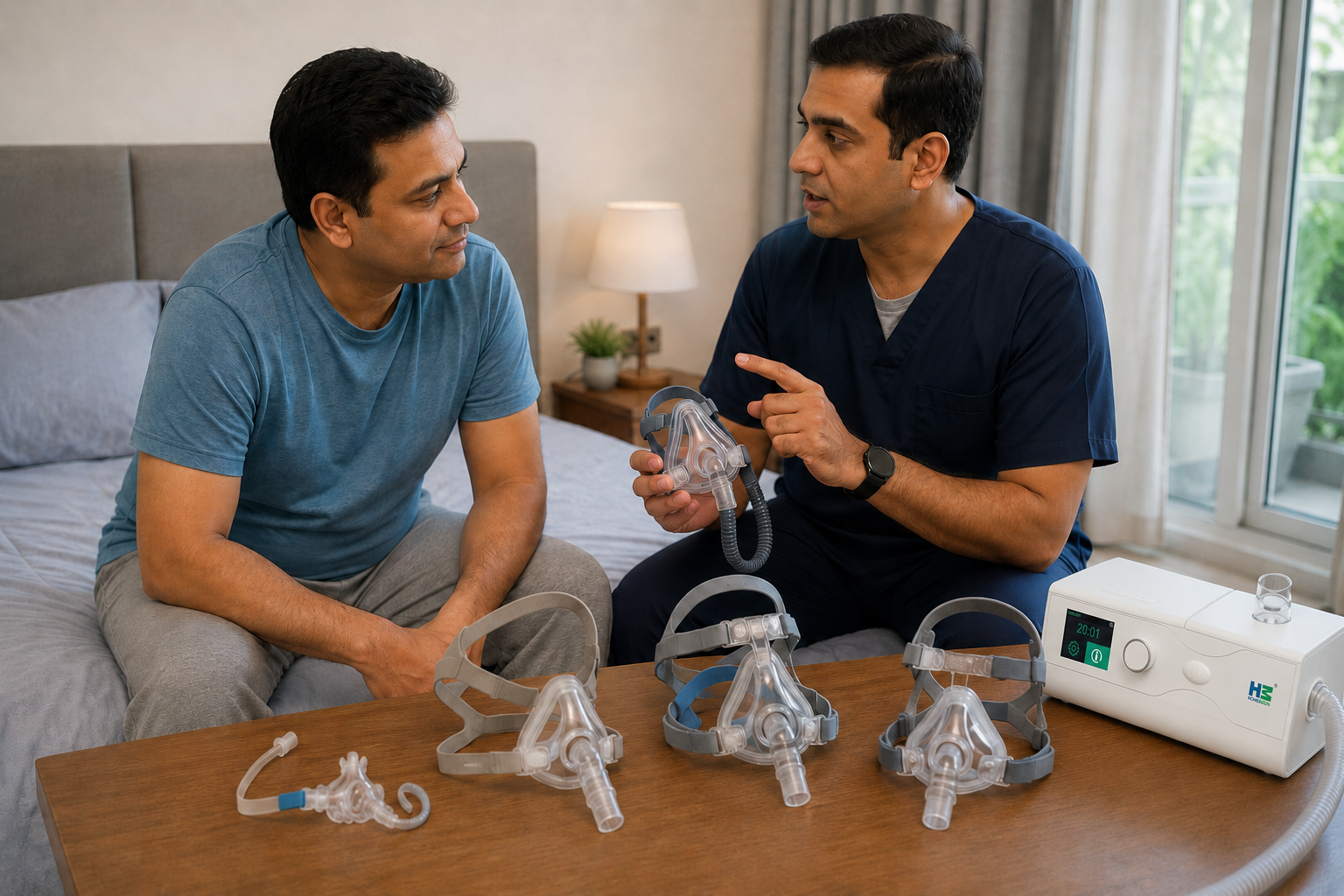
Mask choice is the variable that most reliably separates a compliant, well-treated CPAP patient from a lapsed one. Pressure is titrated, the machine is bought, the ramp is set — and then the mask is wrong, the patient removes it at 3 AM, adherence collapses, and the whole therapy fails.CPAP mask types in India  Getting mask

CPAP and PAP therapy in heart failure: what to use and what to avoid

CPAP and PAP therapy in heart failure: what to use and what to avoid

Roughly half of HFrEF patients, screened by polysomnography, have clinically significant sleep-disordered breathing. The phenotype is usually mixed: Heart failure and sleep-disordered breathing share a bidirectional relationship with meaningful prescribing consequences. A patient with heart failure with reduced ejection fraction (HFrEF, LVEF ≤ 45%) is likely to CPAP therapy for heart failure exhibit some combination

CPAP adherence: the 4-hour threshold, what drives it, and Indian reality

CPAP adherence: the 4-hour threshold, what drives it, and Indian reality

Every CPAP user eventually encounters the number: 4 hours a night, on at least 70% of nights, over a rolling 30-day window. That is the compliance threshold used by insurance schemes internationally, by sleep-medicine quality registries, and — where follow-up happens at all — by clinicians assessing whether to continue, modify, or discontinue CPAP therapy.

BiPAP-ST mode and indications: when a backup rate is essential

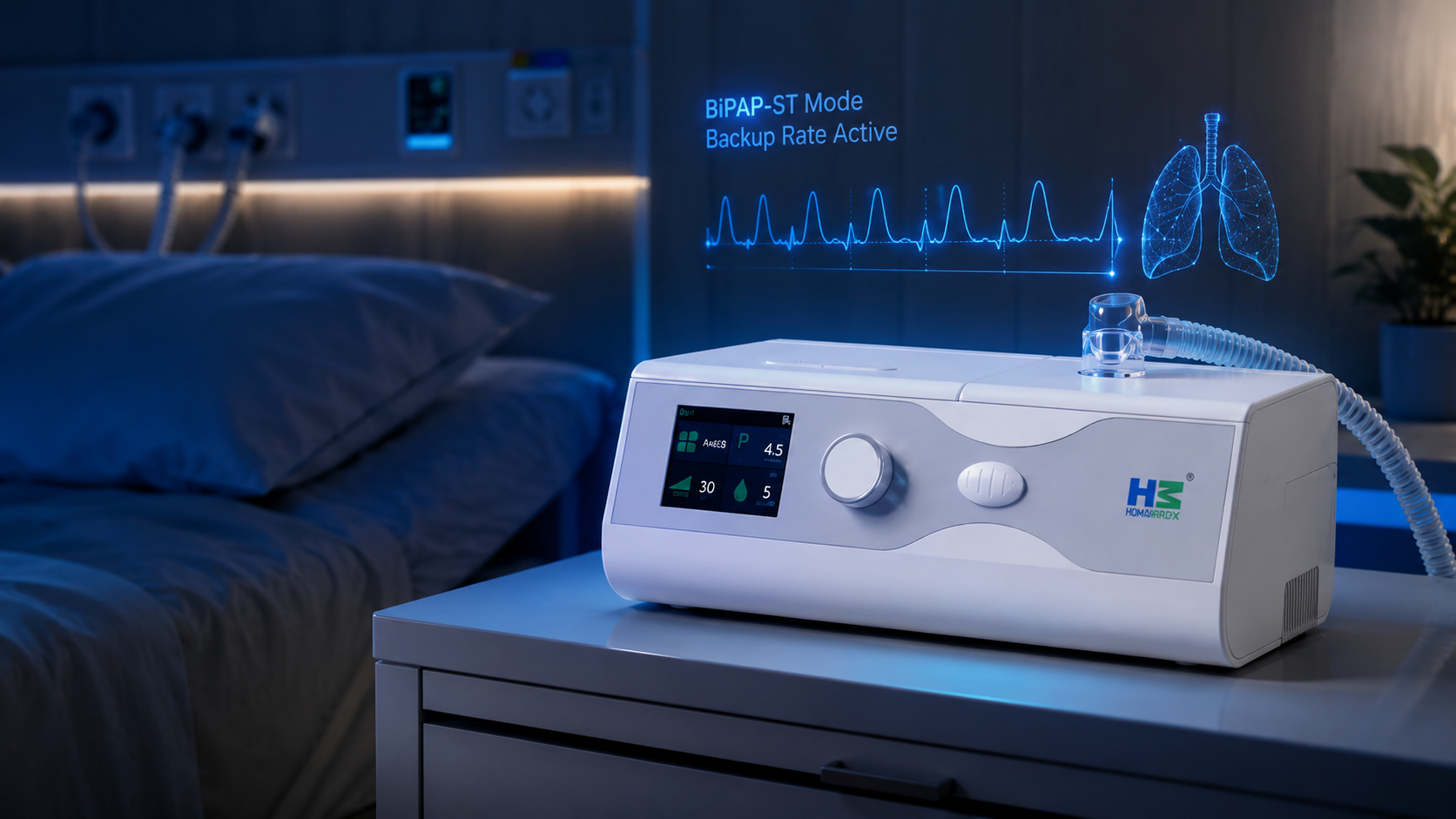
BiPAP-ST mode and indications: when a backup rate is essential

Most bilevel positive-pressure therapy sold in India is BiPAP-S — the spontaneous mode, where the machine follows the patient’s breath trigger. Each IPAP begins when the patient starts to inhale; each EPAP begins when the patient exhales. When the patient stops breathing, the machine waits. For obstructive sleep apnea patients with intact respiratory drive, that