
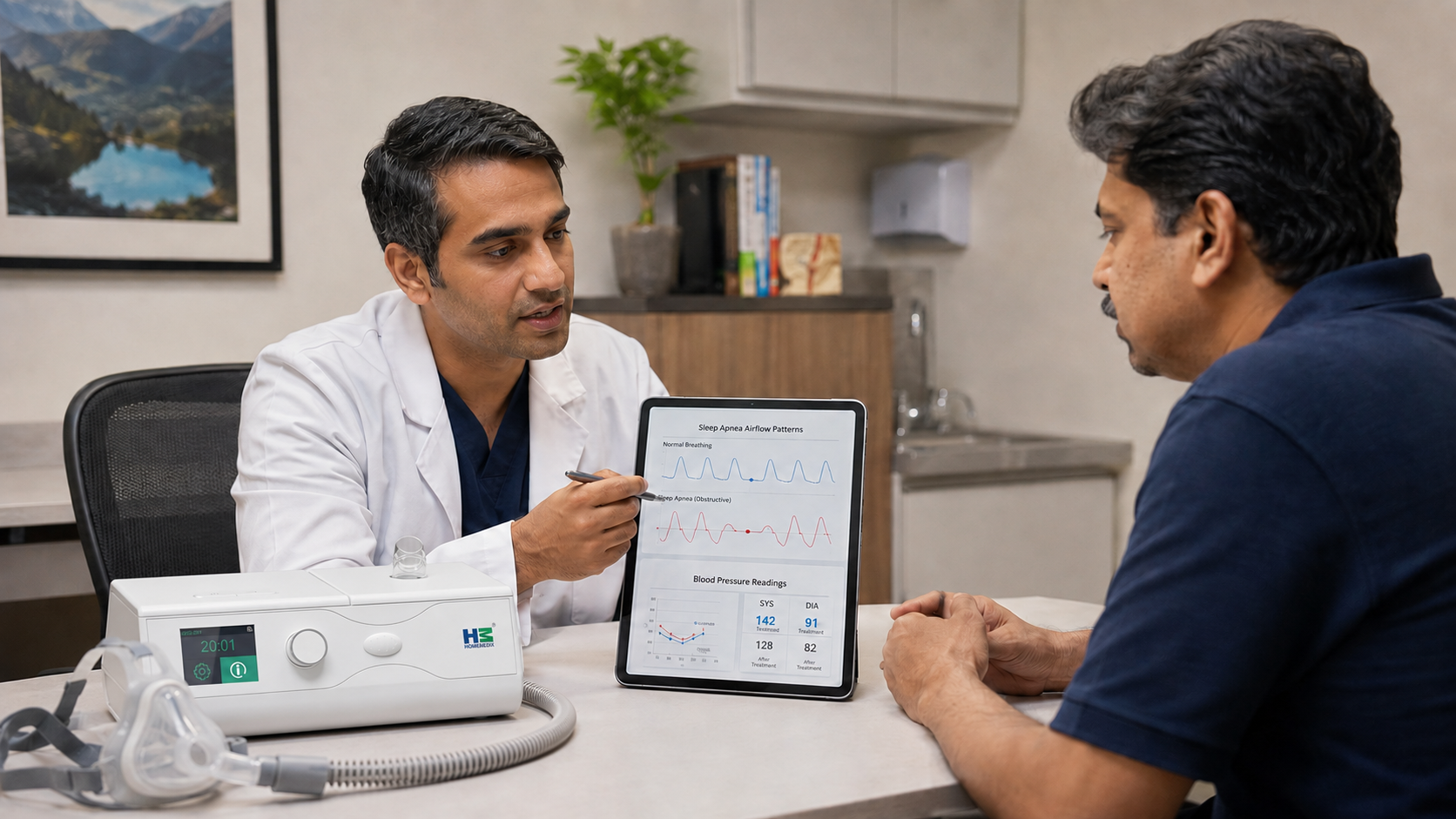
Does CPAP lower blood pressure: what the meta-analyses actually show

Does CPAP lower blood pressure: what the meta-analyses actually show

“Does CPAP lower blood pressure” is one of the most common questions an OSA patient asks after a fresh diagnosis, and the honest answer requires distinguishing average effect from individual response, and distinguishing CPAP used adequately from CPAP used nominally. The published meta-analyses converge on a modest average blood-pressure reduction of roughly 2–3 mmHg systolic. The tails
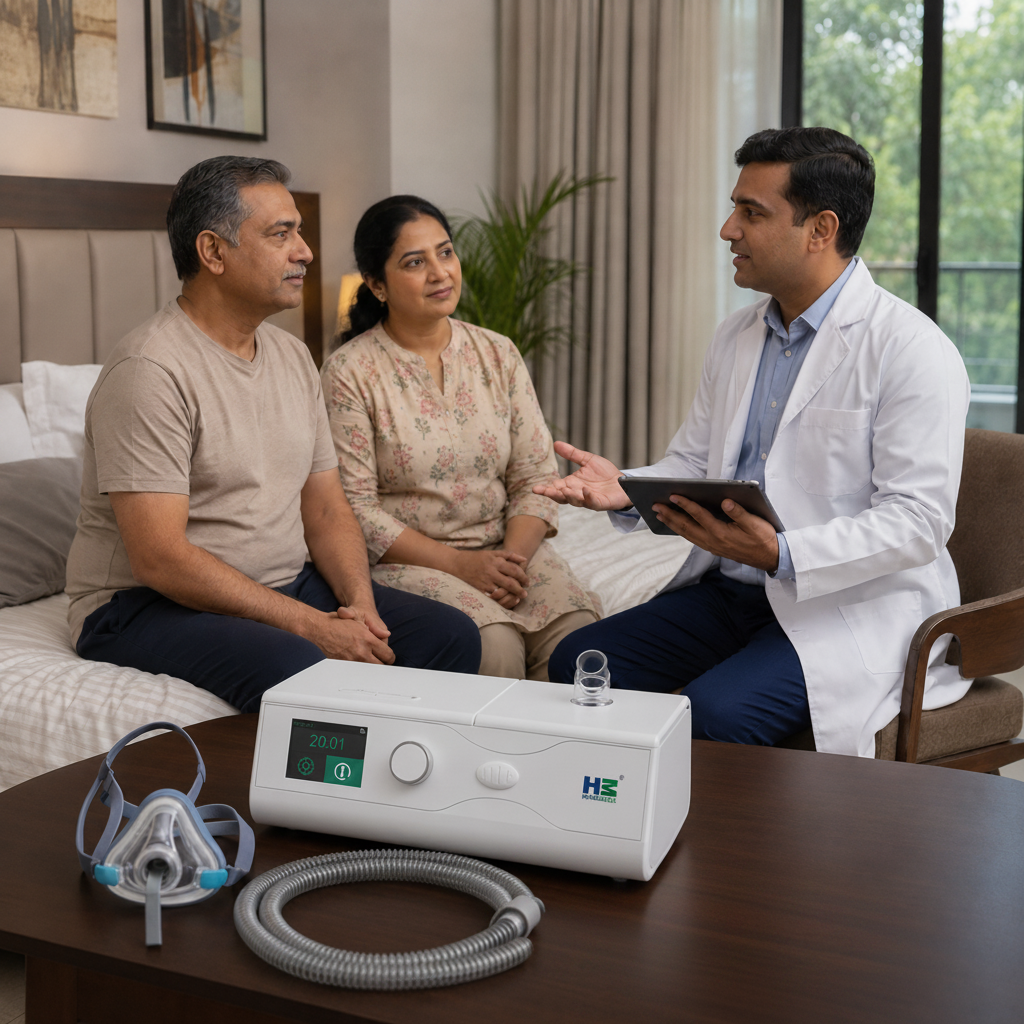
Obstructive vs central vs complex sleep apnea — and why the distinction matters

Obstructive vs central vs complex sleep apnea — and why the distinction matters

A patient with a OSA vs CSA, PSG showing AHI 28 is told “you have sleep apnea” and is prescribed CPAP. The prescription may be correct. It may also be wrong — fatal-level wrong in rare cases — if the events were predominantly central, or if they convert to central on CPAP initiation. The difference between

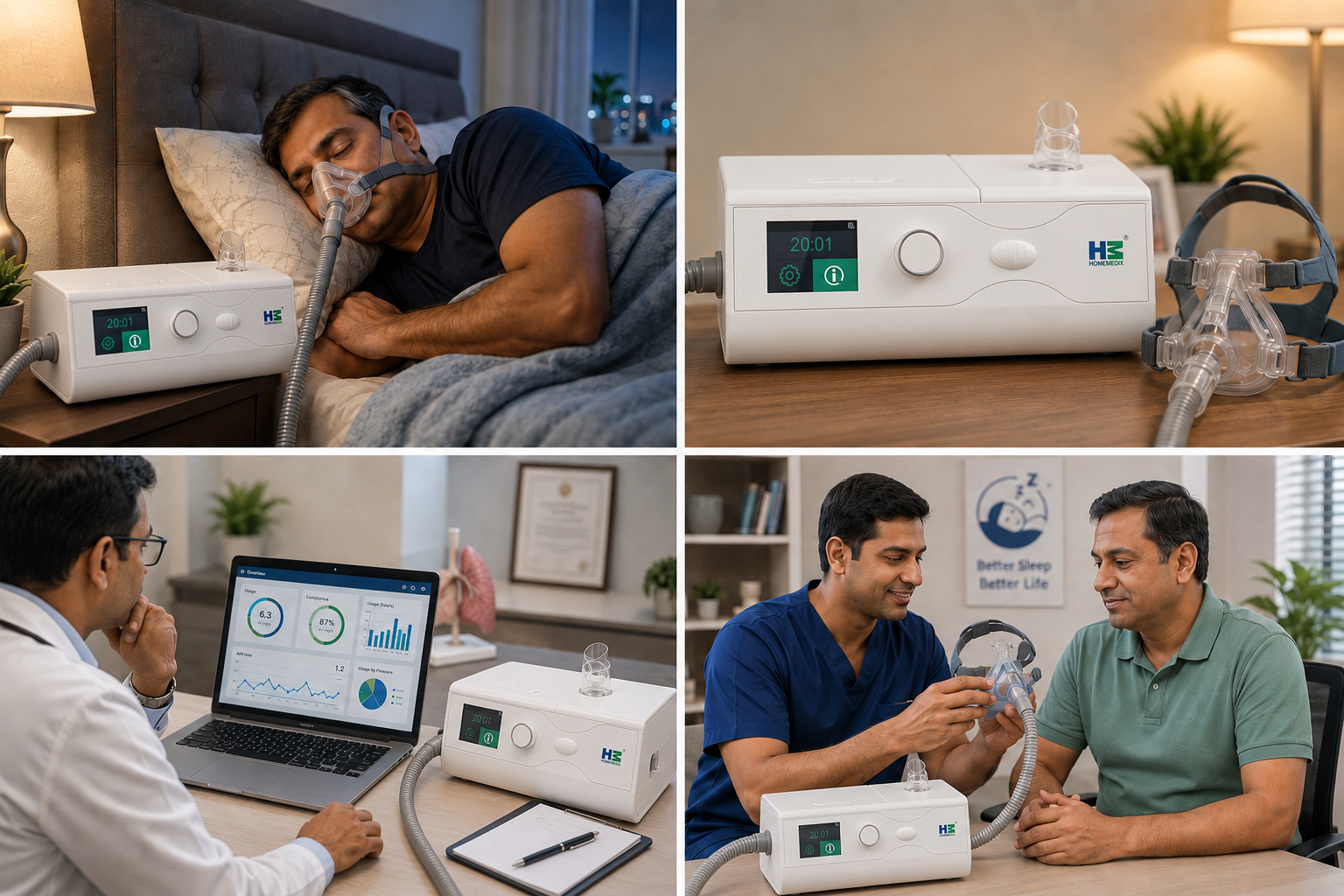
CPAP adherence: the 4-hour threshold, what drives it, and Indian reality

CPAP adherence: the 4-hour threshold, what drives it, and Indian reality

Every CPAP user eventually encounters the number: 4 hours a night, on at least 70% of nights, over a rolling 30-day window. That is the compliance threshold used by insurance schemes internationally, by sleep-medicine quality registries, and — where follow-up happens at all — by clinicians assessing whether to continue, modify, or discontinue CPAP therapy.