Oxygen concentrator insurance coverage in India: reimbursement, CGHS, ESIC, and private policies

Oxygen concentrator insurance coverage in India: reimbursement, CGHS, ESIC, and private policies

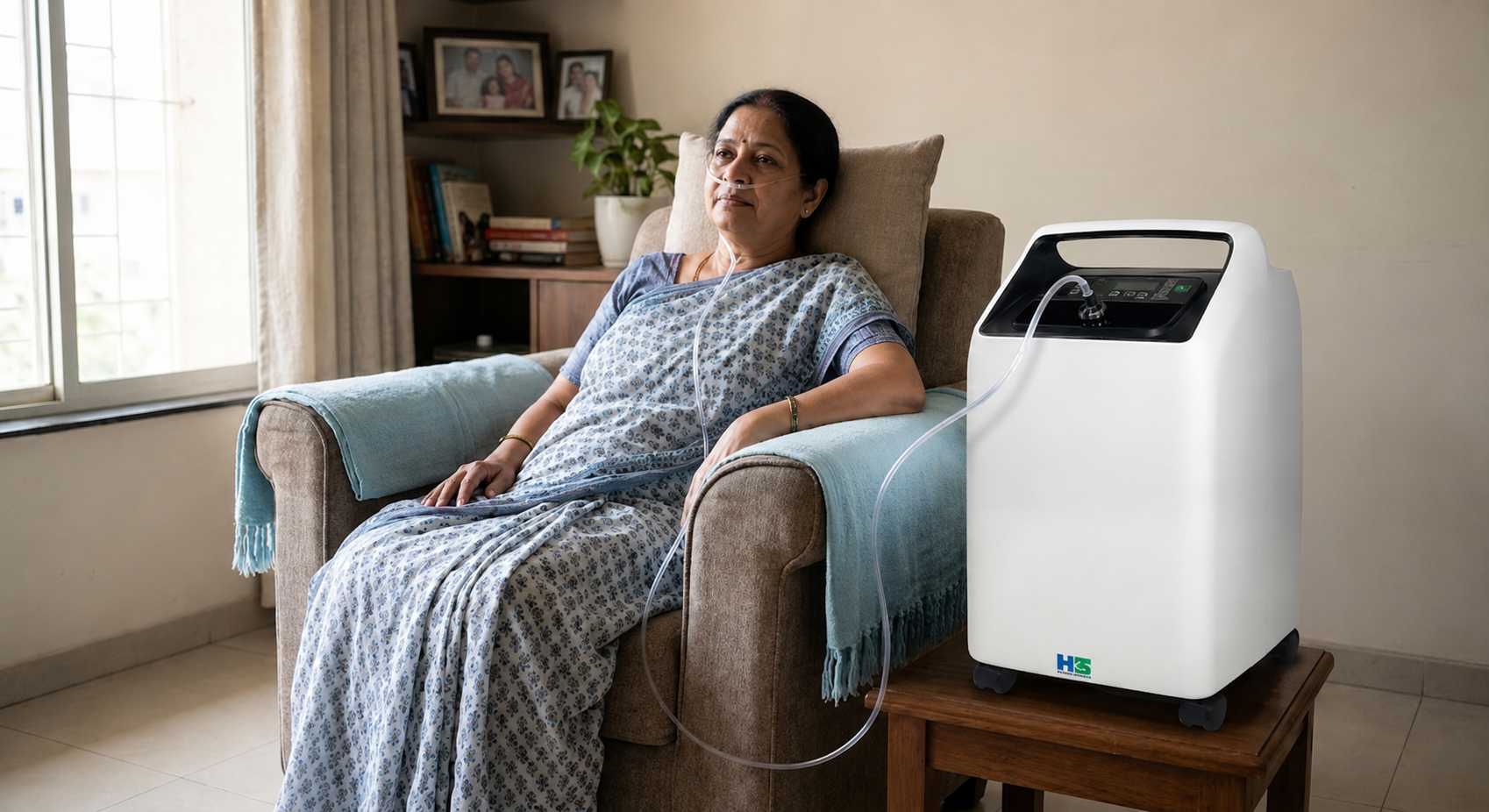
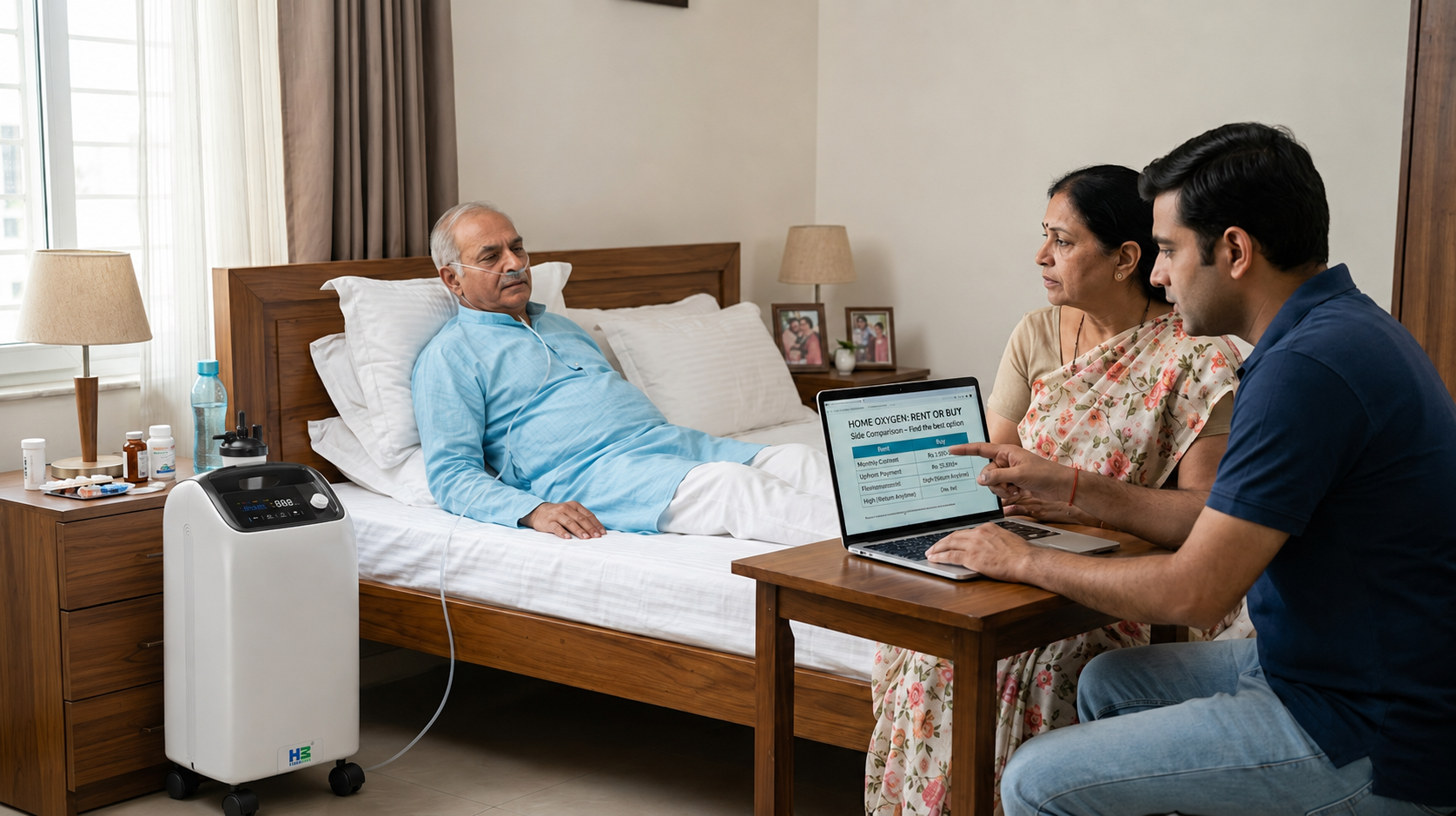
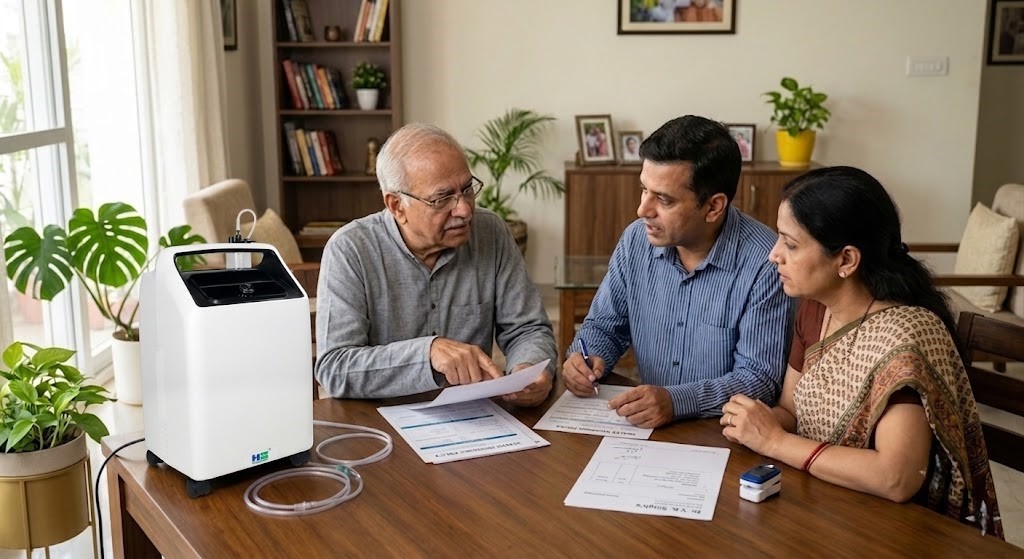
Most Indian families discover oxygen concentrator insurance coverage in India, the coverage problem only after the prescription is written. The pulmonologist recommends a home oxygen concentrator; the family assumes the health policy that covered the hospitalisation will cover the machine; a week later, the Third Party Administrator sends a one-line rejection: “durable medical equipment is

Oxygen concentrator electricity cost by state in India

Oxygen concentrator electricity cost by state in India

oxygen concentrator electricity cost in India a typical 5 LPM home concentrator draws around 350 W of electrical power. A 10 LPM unit is closer to 550–720 W. For a patient on long-term oxygen therapy running the device 18–24 hours a day, the monthly electricity cost is the second-largest ongoing expense of oxygen therapy, after

How PSA oxygen concentration actually works: a technical walkthrough

How PSA oxygen concentration actually works: a technical walkthrough

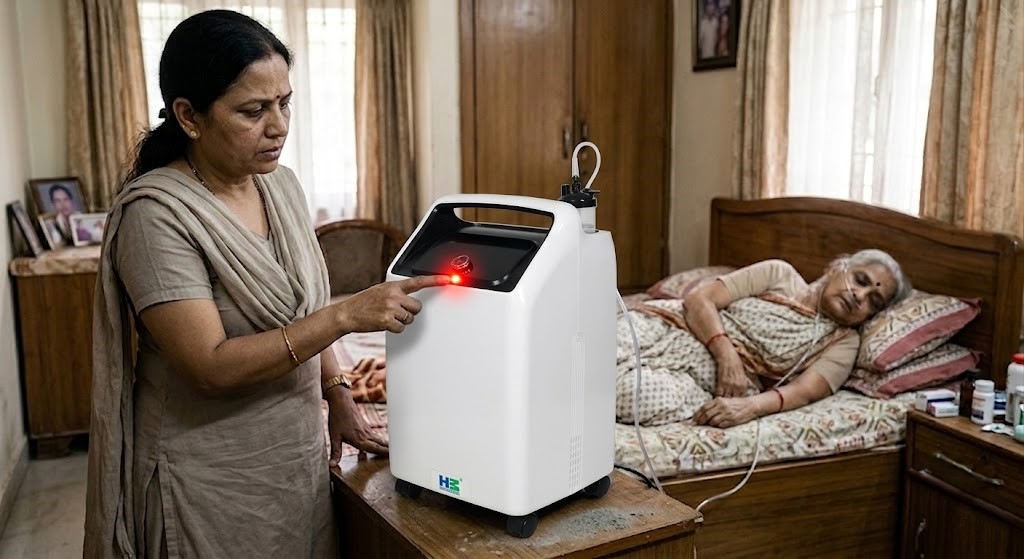
An PSA oxygen concentrator is not a refinery. It does not manufacture oxygen from other elements and it does not store gas from a prior fill. It separates the oxygen already present in room air from the much larger volume of nitrogen, argon, carbon dioxide, and water vapour that surrounds it. The mechanism — pressure swing

Heated tubing on CPAP: what the evidence actually supports

Heated tubing on CPAP: what the evidence actually supports

heated CPAP tubing is the most common upsell at the point of CPAP purchase, and it is one of the few accessories where the cost-benefit calculation genuinely depends on where the patient sleeps, not just on what the patient spends. Roughly ₹3,000–8,000 separates a standard hose from the matched heated-tube option across ResMed ClimateLine, Philips Heated Tube

CPAP leak types — intentional, mask leak, mouth leak, and how to diagnose each

CPAP leak types — intentional, mask leak, mouth leak, and how to diagnose each

“Leak” is printed on the CPAP report in red if it crosses a threshold and in a calm colour if it doesn’t. What the report doesn’t tell the patient — or the dealer who just handed over the machine — is that the number is a composite of three very different phenomena, CPAP leak types and

EPR, C-Flex, A-Flex, Bi-Flex — exhalation pressure relief explained

EPR, C-Flex, A-Flex, Bi-Flex — exhalation pressure relief explained

At  homemedix , patient who cannot tolerate a CPAP exhalation pressure relief at 12 cmH₂O often tolerates the same prescription with pressure relief during exhalation — the machine drops the pressure by 1–3 cmH₂O for the expiratory phase, letting the patient breathe out against a lower pressure before the next inspiration reinstates the full prescribed value. This feature, under various

CPAP side effects and management: aerophagia, dry mouth, leaks, and claustrophobia

CPAP side effects and management: aerophagia, dry mouth, leaks, and claustrophobia

CPAP therapy is well-tolerated for most patients after a 2–4 week acclimation period, but a substantial minority CPAP side effects encounter side effects that, if not resolved, become adherence failures. Almost every side effect has a standard clinical solution, and the solutions are not obscure — they involve pressure adjustment, mask swap, humidification tuning, or graduated desensitisation.