
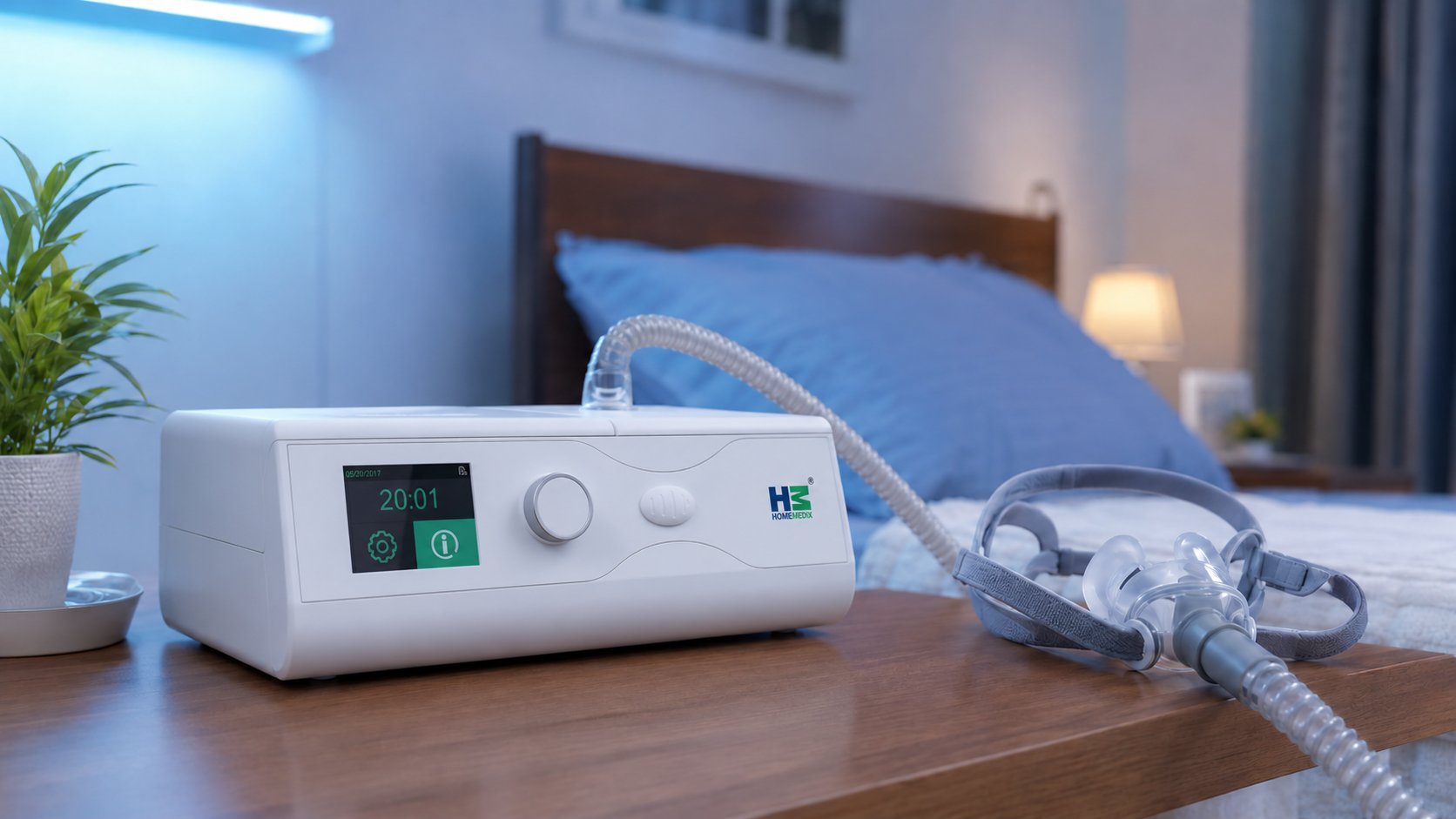
EPR, C-Flex, A-Flex, Bi-Flex — exhalation pressure relief explained

EPR, C-Flex, A-Flex, Bi-Flex — exhalation pressure relief explained

At  homemedix , patient who cannot tolerate a CPAP exhalation pressure relief at 12 cmH₂O often tolerates the same prescription with pressure relief during exhalation — the machine drops the pressure by 1–3 cmH₂O for the expiratory phase, letting the patient breathe out against a lower pressure before the next inspiration reinstates the full prescribed value. This feature, under various
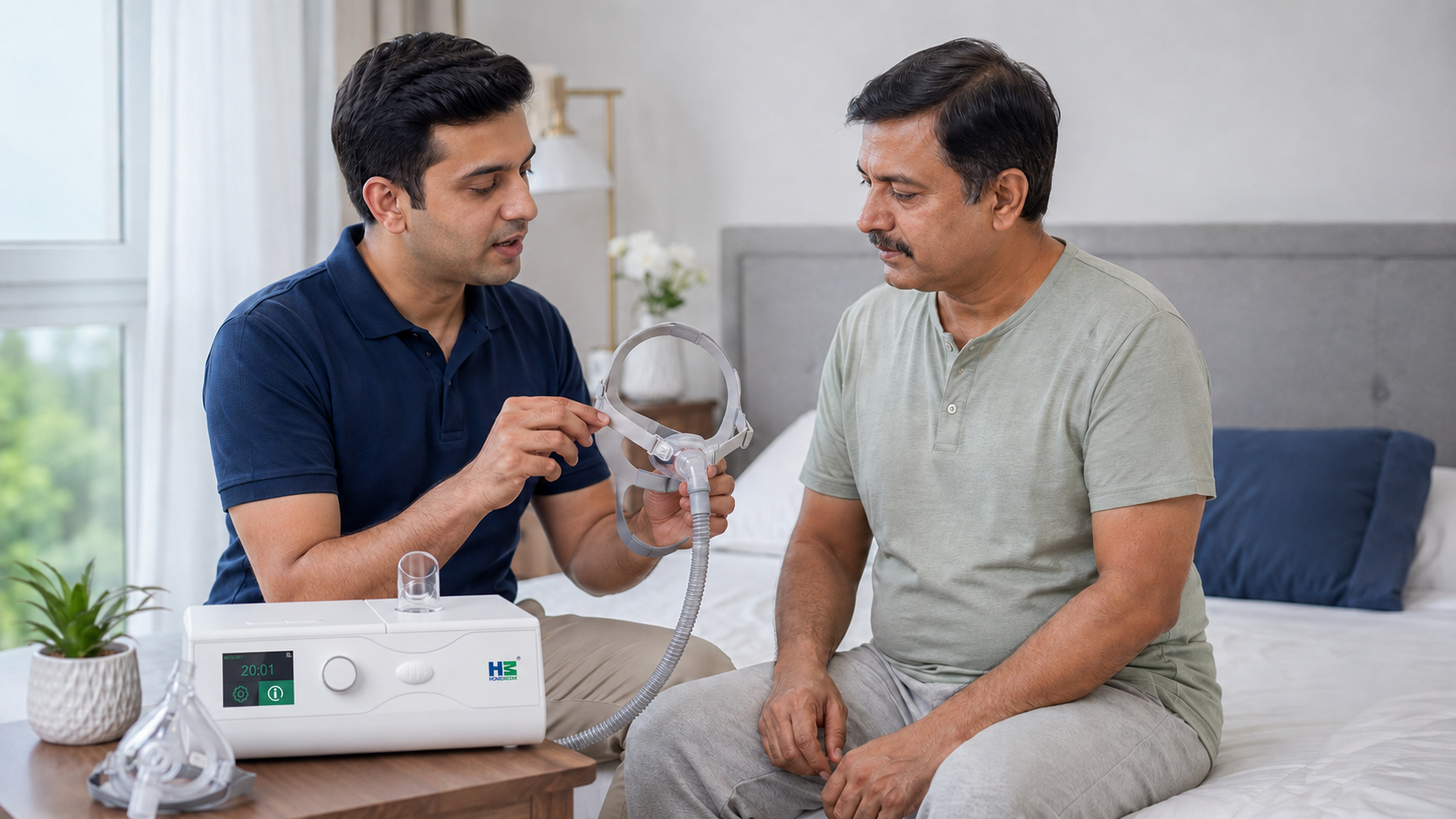
CPAP side effects and management: aerophagia, dry mouth, leaks, and claustrophobia

CPAP side effects and management: aerophagia, dry mouth, leaks, and claustrophobia

CPAP therapy is well-tolerated for most patients after a 2–4 week acclimation period, but a substantial minority CPAP side effects encounter side effects that, if not resolved, become adherence failures. Almost every side effect has a standard clinical solution, and the solutions are not obscure — they involve pressure adjustment, mask swap, humidification tuning, or graduated desensitisation.