Does CPAP lower blood pressure: what the meta-analyses actually show

Does CPAP lower blood pressure: what the meta-analyses actually show

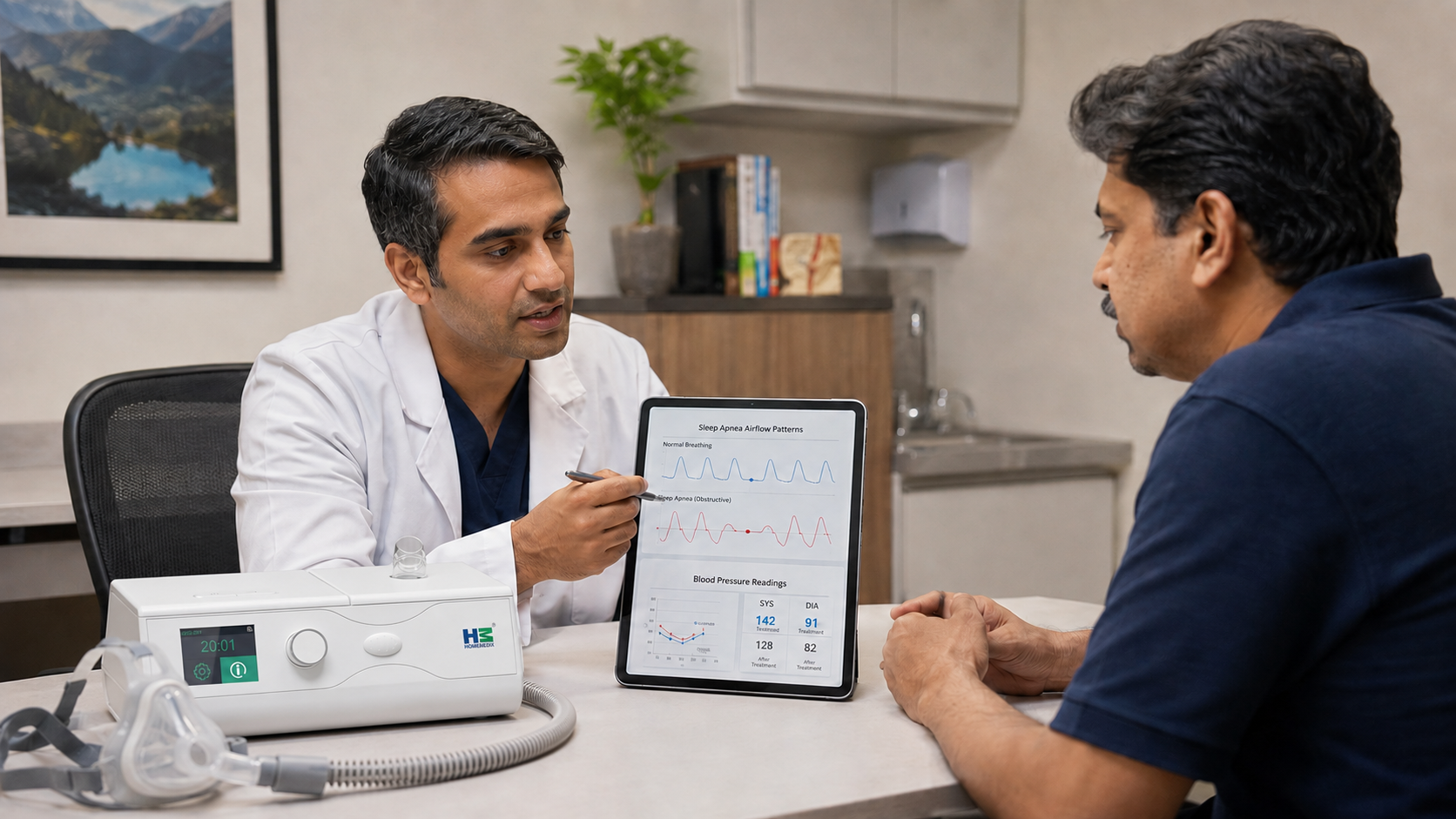
“Does CPAP lower blood pressure” is one of the most common questions an OSA patient asks after a fresh diagnosis, and the honest answer requires distinguishing average effect from individual response, and distinguishing CPAP used adequately from CPAP used nominally. The published meta-analyses converge on a modest average blood-pressure reduction of roughly 2–3 mmHg systolic. The tails
Obstructive vs central vs complex sleep apnea — and why the distinction matters

Obstructive vs central vs complex sleep apnea — and why the distinction matters

A patient with a OSA vs CSA, PSG showing AHI 28 is told “you have sleep apnea” and is prescribed CPAP. The prescription may be correct. It may also be wrong — fatal-level wrong in rare cases — if the events were predominantly central, or if they convert to central on CPAP initiation. The difference between

CPAP leak types — intentional, mask leak, mouth leak, and how to diagnose each

CPAP leak types — intentional, mask leak, mouth leak, and how to diagnose each

“Leak” is printed on the CPAP report in red if it crosses a threshold and in a calm colour if it doesn’t. What the report doesn’t tell the patient — or the dealer who just handed over the machine — is that the number is a composite of three very different phenomena, CPAP leak types and

CPAP for stroke recovery patients: evidence and initiation

CPAP for stroke recovery patients: evidence and initiation

Stroke and sleep apnea have a two-way relationship that clinicians have understood for two decades but Indian practice is still catching up to. Untreated obstructive CPAP for stroke recovery patients sleep apnea is an independent risk factor for ischaemic stroke, and stroke itself — particularly when it affects the brainstem, insular cortex, or upper airway motor control