CPAP mask types and Indian facial morphology — nasal pillows, nasal, full-face, hybrid

CPAP mask types and Indian facial morphology — nasal pillows, nasal, full-face, hybrid

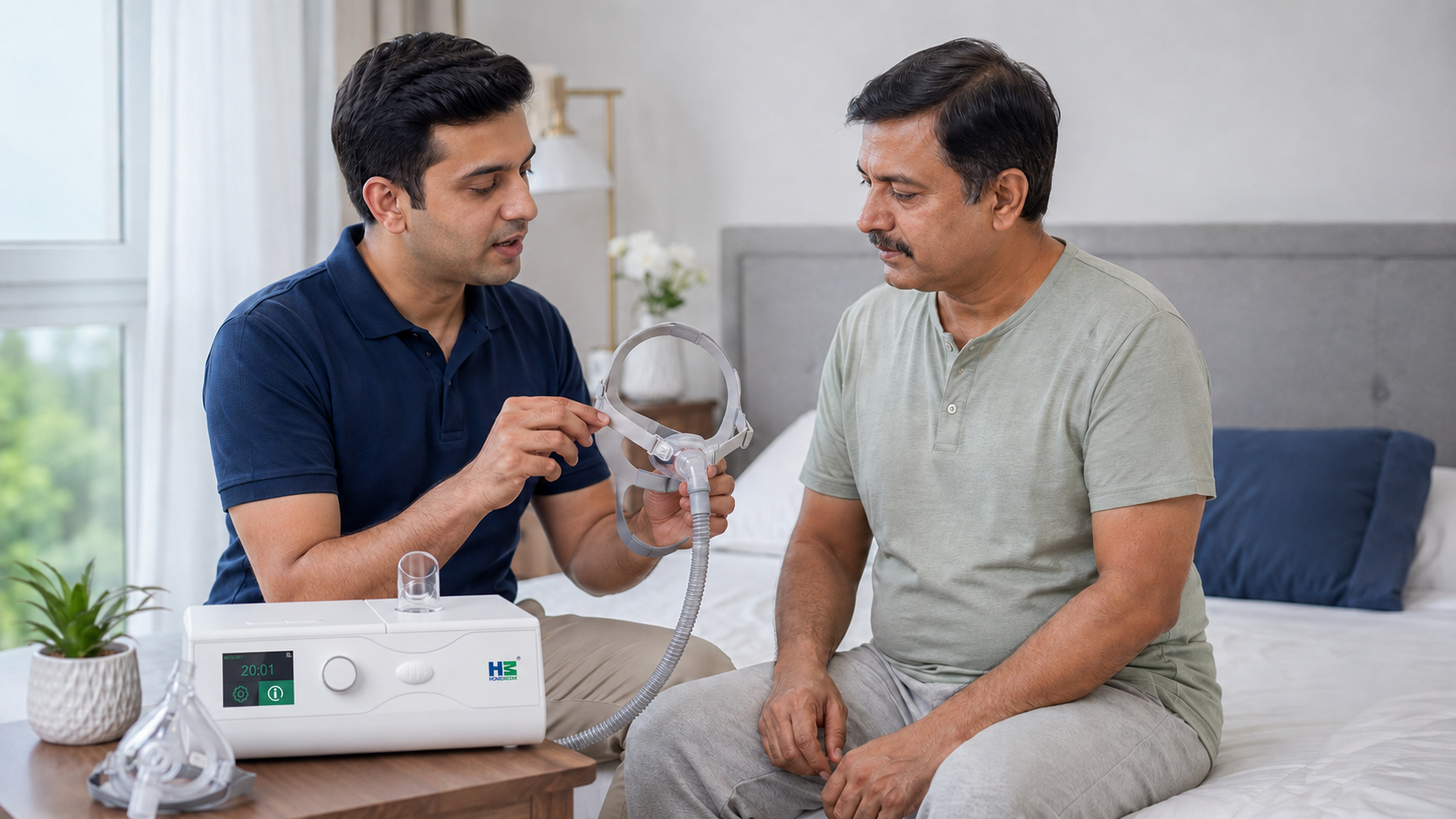
Mask choice is the variable that most reliably separates a compliant, well-treated CPAP patient from a lapsed one. Pressure is titrated, the machine is bought, the ramp is set — and then the mask is wrong, the patient removes it at 3 AM, adherence collapses, and the whole therapy fails.CPAP mask types in India  Getting mask

CPAP for stroke recovery patients: evidence and initiation

CPAP for stroke recovery patients: evidence and initiation

Stroke and sleep apnea have a two-way relationship that clinicians have understood for two decades but Indian practice is still catching up to. Untreated obstructive CPAP for stroke recovery patients sleep apnea is an independent risk factor for ischaemic stroke, and stroke itself — particularly when it affects the brainstem, insular cortex, or upper airway motor control

CPAP compliance evidence: what the data shows about who sticks with therapy

CPAP compliance evidence: what the data shows about who sticks with therapy

 A CPAP prescription written is not a CPAP therapy delivered. Between the prescription and the clinical benefit sits a long, thin corridor called adherence, and the published data on how many patients successfully walk through that corridor is sobering. This article summarises the compliance evidence base — how the 4 hours per night, 70% of

CPAP and PAP therapy in heart failure: what to use and what to avoid

CPAP and PAP therapy in heart failure: what to use and what to avoid

Roughly half of HFrEF patients, screened by polysomnography, have clinically significant sleep-disordered breathing. The phenotype is usually mixed: Heart failure and sleep-disordered breathing share a bidirectional relationship with meaningful prescribing consequences. A patient with heart failure with reduced ejection fraction (HFrEF, LVEF ≤ 45%) is likely to CPAP therapy for heart failure exhibit some combination

CPAP adherence: the 4-hour threshold, what drives it, and Indian reality

CPAP adherence: the 4-hour threshold, what drives it, and Indian reality

Every CPAP user eventually encounters the number: 4 hours a night, on at least 70% of nights, over a rolling 30-day window. That is the compliance threshold used by insurance schemes internationally, by sleep-medicine quality registries, and — where follow-up happens at all — by clinicians assessing whether to continue, modify, or discontinue CPAP therapy.

Counterfeit oxygen concentrators in India: how to spot them before you buy

Counterfeit oxygen concentrators in India: how to spot them before you buy

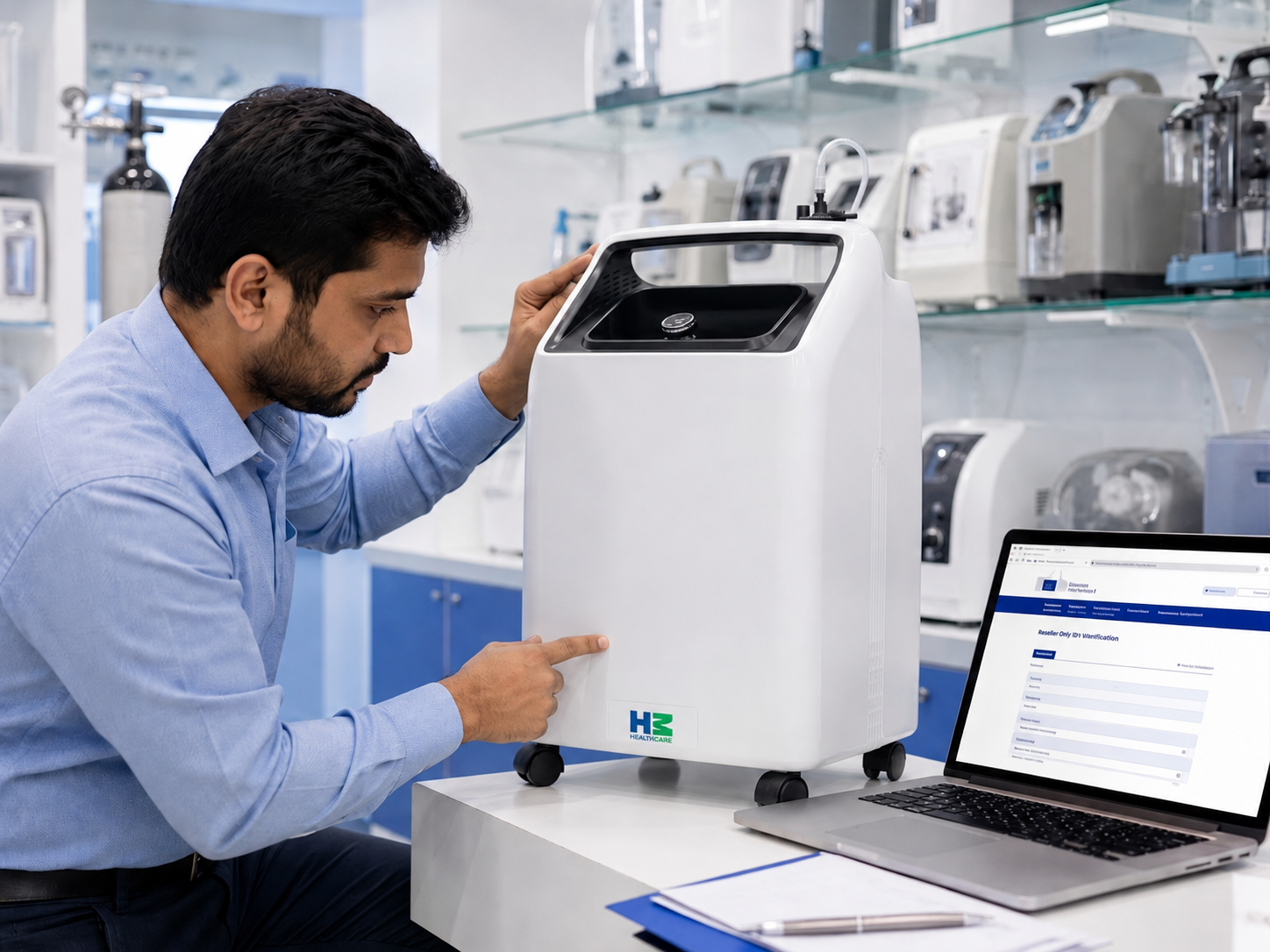
counterfeit oxygen concentrators in India.The 2021 COVID-19 crisis flooded India with oxygen concentrators. Demand during April–June 2021 outstripped the licensed supply chain by an order of magnitude. The gap was filled by imports through non-standard channels, bulk-buying from unaudited Chinese OEMs, and a visible counterfeit segment that put “branded” stickers on unbranded units and pushed

COPD oxygen prescription in India: GOLD 2024 LTOT, titration, and the risks of over-prescribing

COPD oxygen prescription in India: GOLD 2024 LTOT, titration, and the risks of over-prescribing

COPD oxygen prescription in India.Long-term oxygen therapy remains one of only three interventions — alongside smoking cessation and, in selected patients, pulmonary rehabilitation or lung volume reduction — that extends survival in COPD.   The evidence anchoring this is four decades old, the thresholds have not moved materially, and yet in Indian practice, LTOT prescription

Counterfeit oxygen concentrators in India: how to spot them before you buy

Counterfeit oxygen concentrators in India: how to spot them before you buy

counterfeit oxygen concentrators in India.The 2021 COVID-19 crisis flooded India with oxygen concentrators. Demand during April–June 2021 outstripped the licensed supply chain by an order of magnitude. The gap was filled by imports through non-standard channels, bulk-buying from unaudited Chinese OEMs, and a visible counterfeit segment that put “branded” stickers on unbranded units and pushed