
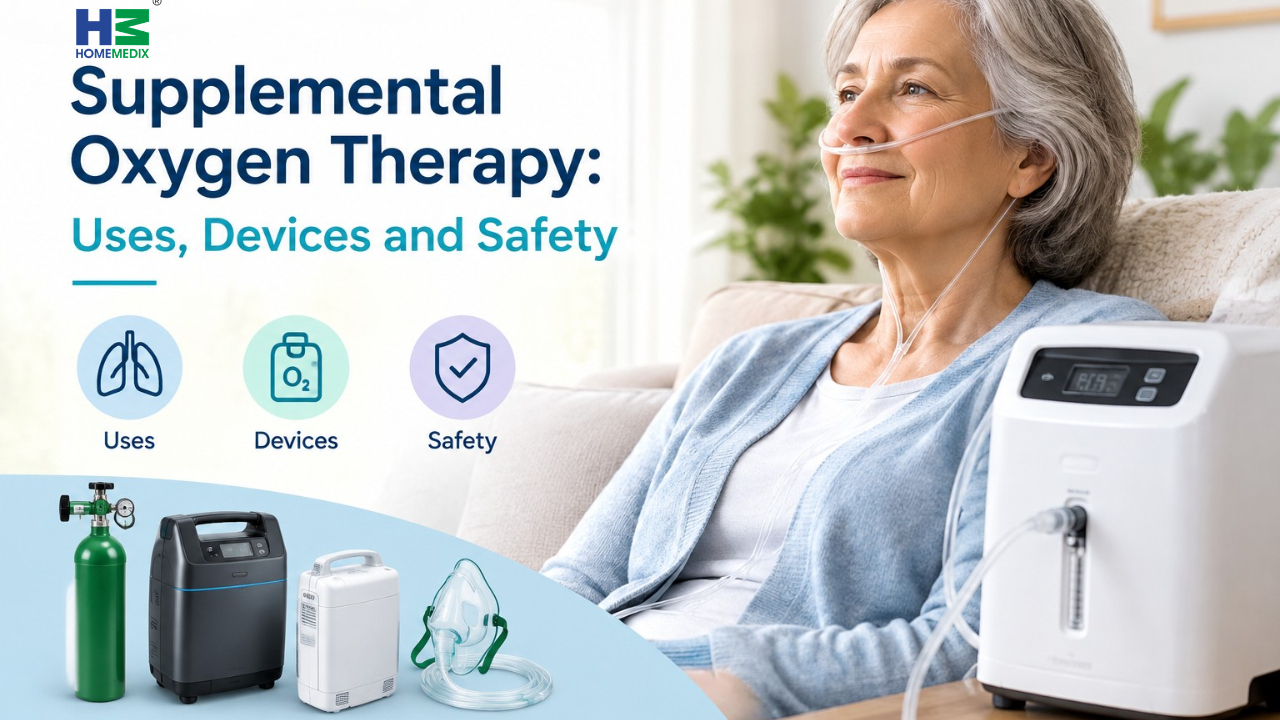
Supplemental Oxygen Therapy: Uses, Devices and Safety
When your body does not receive enough oxygen, even simple daily activities can become challenging. Oxygen Therapy is a medically prescribed treatment that provides supplemental oxygen to people with low blood oxygen levels, helping support normal body function and improving quality of life when clinically appropriate.
Whether you are a patient, caregiver, or family member looking for reliable information, this guide explains how oxygen therapy works, the different oxygen devices available, essential safety precautions, and practical tips for choosing suitable oxygen equipment. For individuals in Bengaluru and across Karnataka, Home Medix offers trusted medical equipment solutions designed to support safe and comfortable home care.
What Is Oxygen Therapy?
Oxygen Therapy is the controlled delivery of supplemental oxygen to individuals whose blood oxygen levels are lower than recommended. Oxygen enters the bloodstream through the lungs and is transported throughout the body, supporting the brain, heart, muscles, and other vital organs.
A healthcare professional determines whether oxygen therapy is necessary after assessing:
Oxygen saturation levels
Medical history
Breathing difficulties
Lung function
Activity and sleep requirements
Important: Oxygen should always be used according to a doctor’s prescription. Never adjust oxygen flow rates without professional advice.
When Is Supplemental Oxygen Therapy Recommended?
Not everyone experiencing breathlessness requires oxygen therapy. It is typically prescribed only after medical evaluation confirms reduced oxygen levels.
Chronic Respiratory Conditions
Oxygen support may benefit certain patients living with:
Chronic Obstructive Pulmonary Disease (COPD)
Interstitial lung disease
Pulmonary fibrosis
Other respiratory disorders causing low oxygen saturation
Recovery After Illness or Surgery
Some individuals may temporarily require supplemental oxygen during recovery from specific illnesses or surgical procedures until oxygen levels stabilise.
Oxygen During Sleep or Physical Activity
Certain patients experience reduced oxygen levels only while sleeping or during exercise. In such cases, oxygen therapy may be prescribed for specific periods rather than continuously.
Types of Oxygen Devices
Choosing the right oxygen device depends on medical requirements, mobility, lifestyle, and the prescribed oxygen flow.
Comparison of Common Oxygen Equipment
Oxygen Equipment | Best Suited For | Power Source | Portable |
Oxygen Concentrator | Home oxygen therapy | Electricity | No |
Portable Oxygen Concentrator | Active individuals | Battery & electricity | Yes |
Oxygen Cylinder | Backup or transport | Compressed oxygen | Yes |
Nasal Cannula | Comfortable oxygen delivery | Connected device | Yes |
Oxygen Mask | Higher oxygen delivery needs | Connected device | Yes |
1. Oxygen Concentrator
An oxygen concentrator filters ambient air and delivers concentrated oxygen without storing oxygen in tanks. It is commonly used for long-term home oxygen therapy and offers continuous oxygen support when electricity is available.
2. Portable Oxygen Concentrator
Portable models provide greater mobility, allowing suitable patients to travel or move around more comfortably. Device suitability depends on prescribed oxygen requirements.
3. Oxygen Cylinder
Oxygen cylinders contain compressed medical oxygen and are useful as a primary or backup oxygen source. Proper storage and handling are essential because they contain oxygen under pressure.
4. Nasal Cannula and Oxygen Mask
These accessories deliver oxygen from concentrators or cylinders. A nasal cannula is lightweight and comfortable for many users, while oxygen masks may be prescribed for different clinical situations.
Benefits of Oxygen Therapy
When prescribed appropriately, Oxygen Therapy can provide several important clinical benefits.
Potential Benefits Include:
Supporting healthy oxygen levels in the bloodstream
Reducing symptoms associated with low oxygen saturation
Improving tolerance for everyday activities in suitable patients
Supporting sleep in patients with prescribed nighttime oxygen
Enabling safer home-based respiratory care
The effectiveness of oxygen therapy depends on the individual’s medical condition and proper adherence to the prescribed treatment plan.
Oxygen Therapy Safety at Home
Safety is one of the most important aspects of using oxygen equipment. Although oxygen itself is not flammable, it greatly increases the risk of fire because it supports combustion.
Fire Safety Rules
Always keep oxygen equipment away from:
Cigarettes and smoking materials
Candles
Gas stoves
Fireplaces
Incense sticks
Oil lamps
Create a strict no-smoking environment wherever oxygen is being used.
Safe Equipment Placement
Position oxygen concentrators in a well-ventilated area with sufficient space around the unit. Avoid placing equipment against walls, behind curtains, or inside enclosed cabinets.
Electrical Safety
For electrically powered oxygen devices:
Use grounded electrical outlets.
Avoid overloaded extension boards.
Keep cords away from water.
Follow manufacturer maintenance instructions.
Tubing Management
Long oxygen tubing can create tripping hazards. Keep walkways clear and inspect tubing regularly for bends or damage.
Common Mistakes to Avoid
Many home oxygen users unintentionally make mistakes that affect safety or treatment effectiveness.
Mistake | Why It Matters |
Changing oxygen flow independently | May be unsafe for some medical conditions |
Smoking near oxygen equipment | Serious fire hazard |
Ignoring equipment alarms | May indicate device malfunction |
Poor cleaning of accessories | Can affect hygiene and performance |
Blocking concentrator ventilation | May reduce equipment efficiency |
How to Choose the Right Oxygen Equipment
Selecting appropriate oxygen equipment involves more than choosing a device. Several practical factors should be considered.
Medical Prescription
Always begin with the oxygen flow and usage duration prescribed by your healthcare professional.
Lifestyle Needs
Ask yourself:
Will oxygen be used only at home?
Is mobility important?
Is nighttime oxygen required?
Will the device need battery support?
Maintenance Requirements
Choose equipment that includes clear maintenance guidance, replacement accessories, and dependable technical support.
For patients in Bengaluru, Karnataka, Home Medix assists families by providing quality medical equipment and guidance on selecting suitable oxygen support solutions based on prescribed requirements.
Who Is Oxygen Therapy Suitable For?
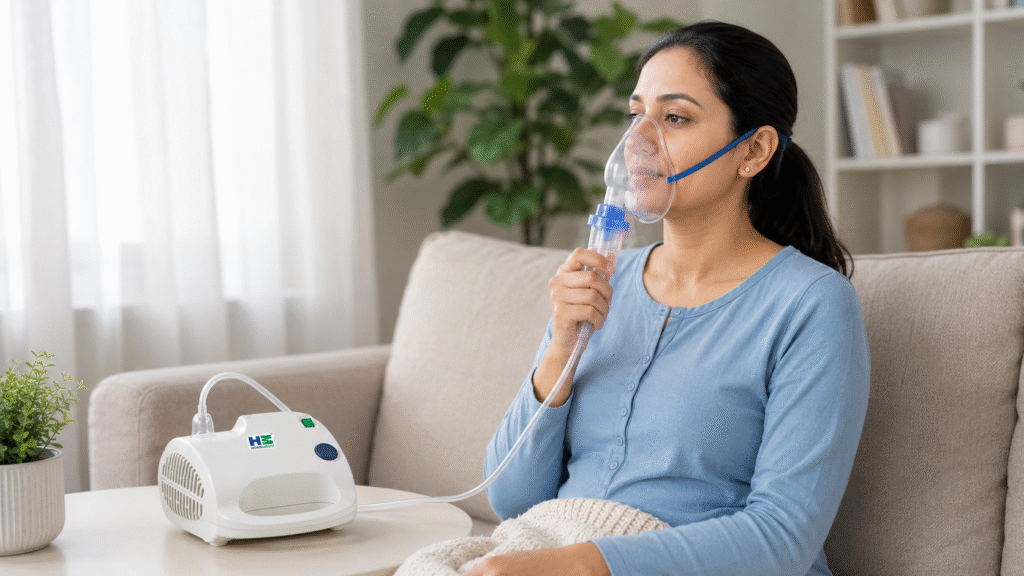
Oxygen Therapy is intended for people with medically confirmed low blood oxygen levels. It may be appropriate for:
Adults with chronic respiratory disease
Elderly patients requiring oxygen support
Individuals recovering from certain medical conditions
Patients prescribed nighttime oxygen
Home care patients needing long-term respiratory support
Suitability should always be determined by a qualified healthcare professional.
Practical Tips for Patients and Caregivers
To make home oxygen therapy safer and more effective:
Follow the prescribed oxygen settings exactly.
Clean nasal cannulas and masks as instructed.
Keep oxygen equipment dry and dust-free.
Store oxygen cylinders securely in an upright position where recommended.
Schedule regular equipment servicing when required.
Keep emergency contact numbers easily accessible.
These simple habits can improve both safety and equipment reliability.
When Should You Seek Professional Assistance?
Contact your healthcare provider immediately if the patient experiences:
Sudden worsening breathlessness
Chest pain
Bluish lips or fingertips
Confusion or unusual drowsiness
Persistently low oxygen readings despite prescribed therapy
For equipment concerns such as alarms, damaged tubing, or concentrator malfunction, seek assistance from your medical equipment provider rather than attempting repairs yourself.
Why Choose Home Medix in Bengaluru?
Home Medix supports patients and caregivers across Bengaluru and Karnataka by offering reliable oxygen equipment and home healthcare solutions. From oxygen concentrators to essential respiratory accessories, the focus is on helping families access quality medical equipment along with practical product guidance and dependable customer support.
For enquiries about oxygen support or home medical equipment, visit the Home Medix Contact Page to speak with the team.
I. FAQ Section
1. What is Oxygen Therapy used for?
Oxygen Therapy provides supplemental oxygen to individuals whose blood oxygen levels are lower than recommended. It is prescribed for specific medical conditions and should only be used according to professional medical advice.
2. Is an oxygen concentrator better than an oxygen cylinder?
Neither is universally better. Oxygen concentrators generate oxygen from surrounding air and are suitable for many home users, while oxygen cylinders store compressed oxygen and may be useful as primary or backup oxygen support depending on clinical needs.
3. Can I use Oxygen Therapy without a doctor's prescription?
No. Oxygen is a medical treatment, and inappropriate use may be harmful. A healthcare professional should determine whether oxygen therapy is necessary and prescribe the correct oxygen flow.
4. Is home Oxygen Therapy safe?
Yes, when used correctly. Safety includes keeping oxygen away from flames, following prescribed settings, maintaining equipment properly, and ensuring good ventilation around oxygen devices.
5. How do I choose the right oxygen device?
The right oxygen device depends on your prescribed oxygen requirement, mobility needs, duration of therapy, and whether you require stationary or portable oxygen support. Professional guidance is recommended before selecting equipment.