
How to Choose a Medical Equipment Supplier in India
Choosing the right medical equipment supplier in India is an important decision for hospitals, clinics, nursing facilities, healthcare organisations and home-care users. Medical equipment can directly support diagnosis, monitoring, treatment, mobility, respiratory care and patient comfort, so purchasing decisions should be based on more than price alone.
A reliable supplier should provide suitable products, clear technical information, appropriate documentation and dependable after-sales support. For buyers in Bengaluru, Karnataka and other parts of India, understanding what to check before placing an order can help reduce avoidable purchasing and maintenance problems.
In this guide, we explain the key factors to consider when selecting a medical equipment supplier, common mistakes to avoid and how businesses such as HomeMedix can support healthcare equipment requirements.
What Does a Medical Equipment Supplier Do?
A medical equipment supplier provides healthcare products to customers such as hospitals, clinics, healthcare organisations, distributors and home-care users.
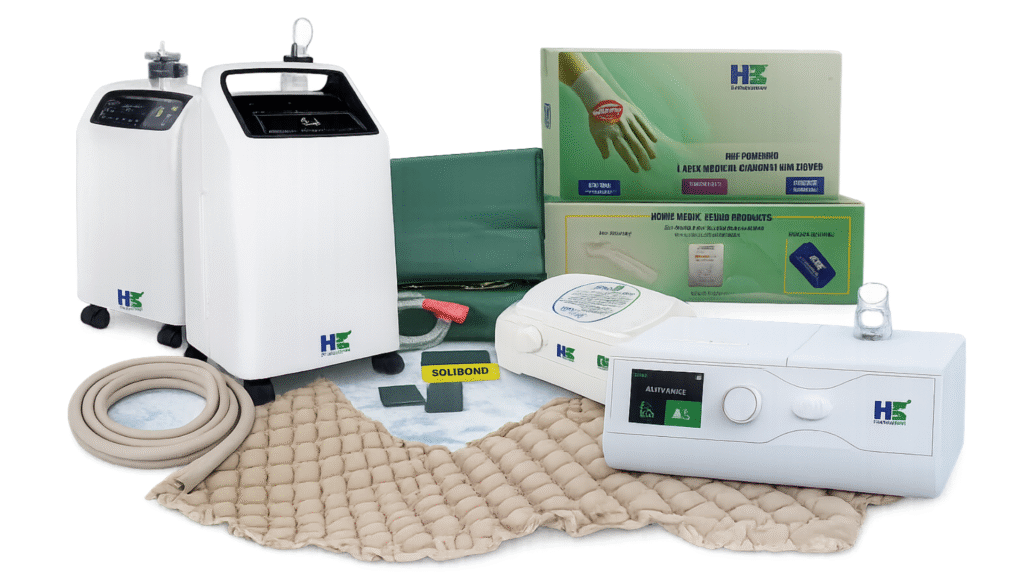
Depending on the supplier, the product portfolio may include:
- Respiratory care equipment
- Oxygen concentrators
- Nebulisers
- Patient-care equipment
- Air and water mattresses
- Medical examination gloves
- Patient monitoring equipment
- Home healthcare products
- General medical supplies
A supplier may manufacture products, import them, distribute products from other manufacturers, or operate across more than one part of the supply chain.
For buyers, the important question is not simply whether a company sells medical equipment. It is whether the supplier can provide equipment that is appropriate for the intended application and supported throughout its useful life.
Why Choosing the Right Medical Equipment Supplier Matters
Medical equipment is different from ordinary consumer products. Product specifications, intended use, maintenance requirements and regulatory considerations can all affect purchasing decisions.
The right supplier can help buyers evaluate:
Product suitability
Equipment should match the intended clinical or home-care application. Specifications should be reviewed carefully rather than relying only on product names or general descriptions.
Quality and reliability
Quality considerations may include materials, construction, performance, accuracy, durability and applicable standards.
Technical support
Some equipment requires installation, operation guidance, servicing or troubleshooting. Access to qualified technical support can therefore be an important purchasing factor.
Warranty and after-sales service
Before purchasing, buyers should understand what the warranty covers, its duration and how service requests are handled.
Availability
For hospitals, clinics and distributors, consistent product availability can be important when equipment or medical supplies are needed repeatedly.
The World Health Organization recommends considering technical specifications before procurement because proper specifications can support the selection of safe, appropriate and effective medical devices.
7 Factors to Consider When Choosing a Medical Equipment Supplier in India
1. Check the Supplier's Product Range
Start by checking whether the supplier offers products relevant to your actual requirement.
For example, a healthcare facility may require respiratory equipment, patient-care products and general medical supplies from different categories.
HomeMedix’s product portfolio includes oxygen concentrators, compressor nebulisers, air beds, water beds, pulse oximeters and latex medical examination gloves.
A supplier with a relevant product range can make procurement more straightforward, particularly when several related products are required.
2. Review Technical Specifications
Never select medical equipment based solely on photographs, brand names or price.
Review specifications such as:
- Intended use
- Capacity or flow rate
- Operating requirements
- Power requirements
- Dimensions
- Materials
- Performance parameters
- Maintenance requirements
- Applicable standards
- Warranty conditions
For example, HomeMedix publishes technical specifications for its oxygen concentrator models, including flow rate, oxygen concentration, power consumption and sound level.
Technical specifications should always be evaluated against the actual requirements of the healthcare setting.
3. Consider Regulatory and Compliance Requirements
Medical devices in India are subject to regulatory requirements. The Central Drugs Standard Control Organization (CDSCO) states that medical devices are regulated under the Drugs and Cosmetics Act, 1940 and the Medical Devices Rules, 2017.
The applicable regulatory requirements can vary according to the type and classification of the medical device.
Therefore, buyers should ask suppliers for relevant documentation and verify that products are appropriate for their intended market and use.
For institutional procurement, it can also be useful to maintain records of product specifications, invoices, warranty information and applicable compliance documents.
4. Evaluate Quality-Control Practices
A supplier’s quality-control process is an important part of supplier evaluation.
Ask questions such as:
- How are products inspected?
- What quality checks are performed?
- Are specifications documented?
- Is product packaging suitable for transportation?
- How are damaged or defective products handled?
- Is there a defined service process?
HomeMedix states that its quality-control process includes checking products at the procurement stage and evaluating parameters such as accuracy, performance and finish.
These details can help buyers understand how a supplier approaches product quality rather than relying only on marketing claims.
5. Check Warranty and After-Sales Service
The purchase should not be considered complete when the equipment is delivered.
For equipment that requires technical support, buyers should understand:
- Warranty duration
- Warranty exclusions
- Service availability
- Spare-part availability
- Maintenance requirements
- Troubleshooting support
- Response process for service requests
HomeMedix states that it provides after-sales support for its oxygen concentrators through biomedical engineering professionals and lists service contact information on its website.
For hospitals and clinics, reliable service support can be particularly important because equipment downtime may disrupt operations.
6. Compare Total Cost, Not Just Purchase Price
The lowest initial price is not necessarily the lowest overall cost.
Before purchasing, consider:
| Factor | What to Evaluate |
|---|---|
| Purchase price | Initial equipment cost |
| Warranty | Coverage and duration |
| Maintenance | Routine service requirements |
| Spare parts | Availability and replacement cost |
| Power consumption | Ongoing operating expense |
| Accessories | Required additional components |
| Service | Availability of technical support |
| Expected usage | Frequency and intensity of use |
A slightly higher upfront cost may be reasonable if the equipment offers appropriate specifications, dependable support and manageable operating requirements.
However, buyers should make comparisons using actual specifications and documented costs rather than assumptions.
7. Evaluate the Supplier's Experience and Service Capability
Experience can be useful when assessing a medical equipment supplier, particularly when the supplier understands the practical requirements of healthcare environments.
According to its official website, HomeMedix India Private Limited was incorporated in 2004 and operates in the trading, importing and supply of medical equipment. The company also states that it has ISO 9001:2016 and ISO 13485:2016 certifications.
Certification claims should always be verified against current documentation when they are important to a procurement decision.
Medical Equipment Supplier vs Medical Equipment Manufacturer
These terms are sometimes used interchangeably, but they can describe different roles.
| Supplier | Manufacturer |
| Sources and distributes products | Produces products |
| May offer products from several brands | Usually focuses on its own manufactured range |
| Can support procurement and distribution | Controls aspects of product design and production |
| May provide service depending on product | May provide manufacturer-specific technical support |
Some companies operate across multiple roles. Therefore, buyers should understand the specific role a company has for the product being purchased.
Common Mistakes When Buying Medical Equipment
Choosing only on price
Price is important, but it should be evaluated alongside specifications, quality, warranty, service and operating costs.
Ignoring intended use
A product may have suitable specifications for one application but not another. Always match the product with the intended user and environment.
Not checking documentation
Buyers should request relevant product information, warranty details and applicable compliance documentation before finalising procurement.
Overlooking after-sales support
Technical equipment may require maintenance or troubleshooting. Confirm the service process before purchase.
Buying without comparing specifications
Comparing only product names can result in an inaccurate assessment. Use a specification-based comparison.
Not considering transportation and storage
Medical equipment may require appropriate packaging, handling, storage or environmental conditions. Discuss these requirements with the supplier when necessary.
Practical Tips for Medical Equipment Procurement
For organisations purchasing healthcare equipment in India, the following process can make supplier evaluation easier:
Step 1: Define the clinical or operational requirement.
Step 2: Prepare the required technical specifications.
Step 3: Shortlist suitable suppliers.
Step 4: Request product specifications and relevant documentation.
Step 5: Compare quality, warranty, service and total cost.
Step 6: Confirm delivery, installation and support requirements.
Step 7: Maintain procurement and warranty records.
For specialised clinical equipment, procurement decisions should involve appropriately qualified healthcare, biomedical engineering or technical professionals.
Who Can Benefit from a Medical Equipment Supplier?
A professional medical equipment supplier may be useful for:
- Hospitals
- Clinics
- Nursing homes
- Home healthcare providers
- Diagnostic and healthcare organisations
- Medical distributors
- Pharmacies with relevant product requirements
- Patients and families purchasing appropriate home-care equipment
For patient-specific equipment, however, product selection should be based on clinical requirements and, where appropriate, guidance from a qualified healthcare professional.
Why Consider a Medical Equipment Supplier in Bengaluru?
Bengaluru is a major healthcare, technology and business centre in Karnataka. Local procurement can provide practical advantages for organisations that require product consultation, delivery coordination or service support in the region.
HomeMedix is based in Rajajinagar, Bengaluru, Karnataka, and provides medical equipment and home healthcare products for healthcare and home-care requirements.
For buyers outside Bengaluru, the key consideration remains the supplier’s ability to provide appropriate products, documentation, delivery and after-sales support to the required location.
How HomeMedix Supports Medical Equipment Requirements
HomeMedix provides a range of medical and home healthcare products, including respiratory equipment, patient-care products and general medical supplies. Its website lists products such as oxygen concentrators, compressor nebulisers, air mattresses and medical examination gloves.
The company also states that it has more than two decades of industry experience and focuses on quality checks, product performance and service support.
If you are comparing suppliers, HomeMedix can be considered as one option for discussing your specific medical equipment requirement, specifications and purchase needs.
What should I look for in a medical equipment supplier in India?
Look for a supplier offering suitable products, clear technical specifications, appropriate documentation, transparent warranty terms and dependable after-sales support. For regulated medical devices, buyers should also consider applicable Indian regulatory requirements and verify relevant documentation before purchasing.
How do I choose medical equipment for a hospital or clinic?
Begin by defining the intended clinical application and technical requirements. Compare suitable products based on specifications, quality, safety, service, warranty, maintenance and total cost. For specialised equipment, involve qualified clinical or biomedical professionals in the selection process.
Are medical devices regulated in India?
Yes. CDSCO states that medical devices in India are regulated under the Drugs and Cosmetics Act, 1940 and the Medical Devices Rules, 2017. The specific regulatory requirements can depend on the device and its classification.
What medical equipment does HomeMedix supply?
HomeMedix lists products including oxygen concentrators, compressor nebulisers, air beds, water beds, pulse oximeters and latex medical examination gloves. Its product range is intended for healthcare and home-care requirements.
Why is after-sales service important for medical equipment?
After-sales service can help with troubleshooting, maintenance, warranty-related issues and technical support. Its importance depends on the type of equipment. Equipment with technical or mechanical components may require more ongoing support than simple consumable medical supplies.
Should I choose a medical equipment supplier based only on price?
No. Purchase price is only one factor. Buyers should also evaluate product specifications, quality, warranty, service, spare parts, operating requirements and suitability for the intended application.
Can individuals purchase medical equipment for home use?
Some medical and home healthcare products are available for individual purchase. However, the suitability of certain equipment depends on the patient’s condition and intended use. Where clinical judgement is required, consult a qualified healthcare professional before purchasing or using the equipment.