
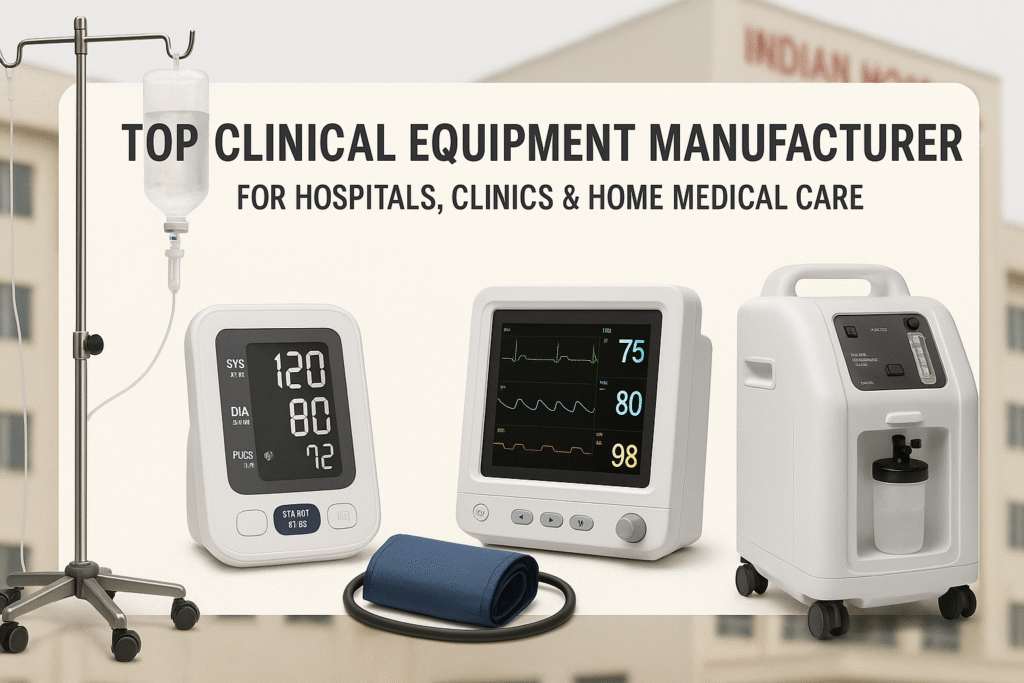
Top Clinical Equipment Manufacturers for Hospitals, Clinics & Home Medical Care
The demand for reliable medical equipment has skyrocketed in recent years, especially after the global shift toward advanced healthcare, telemedicine, and home medical support. Whether you’re a hospital administrator, clinic owner, or home caregiver, choosing the right clinical equipment manufacturers directly affects patient care, safety, and treatment accuracy.
In this detailed guide, we’ll explore everything you need to know about medical equipment—what to buy, what matters when choosing a manufacturer, and how to ensure quality and safety at every level.
What Are Clinical Equipment Manufacturers?
Clinical equipment manufacturers are companies that design, produce, and supply medical devices used for diagnosis, treatment, monitoring, and patient support. These manufacturers follow strict quality, safety, and performance standards—because every device impacts human life.
They produce essential devices such as:
Diagnostic machines (ECG, X-ray, ultrasound)
ICU and OT equipment
Monitoring devices
Home healthcare tools
Emergency and life-support systems
Trusted manufacturers ensure durability, precision, and compliance with national and international health standards.
Why Quality Medical Equipment Matters in 2025
Healthcare has evolved dramatically, and so have patient expectations. High-quality medical equipment is no longer optionaln it’s essential.
Here’s why:
1. Accurate Diagnosis
Even a minor equipment error can lead to misdiagnosis, incorrect treatment, or delayed care.
2. Patient Safety
Certified devices reduce risks like electrical hazards, inaccurate readings, or infection spread.
3. Legal Compliance
Hospitals and clinics must follow regulatory standards like:
ISO 13485
CE Certification
FDA Approval
CDSCO guidelines (India)
4. Long-Term Cost Savings
High-quality equipment lasts years longer, reducing repair and replacement expenses.
If you want your facility to run smoothly, quality equipment is the backbone.
Essential Hospital Equipment Every Facility Needs
Diagnostic Equipment
Accurate diagnosis forms the base of good treatment.
X-ray machines
Ultrasound devices
MRI & CT scanners
ECG & EEG machines
Blood analyzers
ICU & Critical Care Equipment
Critical patients need consistent monitoring and life support.
Ventilators
Patient monitors
Infusion pumps
Syringe pumps
Surgical & Operating Theatre Equipment
OT equipment must be extremely sterile, reliable, and precise.
Surgical tables
OT lights
Electrosurgical units
Sterilizers
Anesthesia machines
General Hospital Support Equipment
Hospital beds
Wheelchairs & stretchers
Autoclaves
Examination tables
Nebulizers
BP monitors
A good clinical equipment manufacturer ensures safety and precision across all categories.
Future Trends in Medical Equipment Manufacturing
- AI-powered diagnostic tools
- Portable handheld devices
- Home ICU systems
- Wearable medical sensors
- Smart monitoring apps
Conclusion
Choosing the right clinical equipment manufacturers is a long-term investment in safety, accuracy, and operational efficiency. Whether you’re setting up a hospital, upgrading a clinic, or supporting home healthcare, selecting certified, durable, and reliable medical devices ensures trustworthy patient care.
From diagnostic tools to life-saving ICU equipment and home medical devices, the right manufacturer should offer quality, warranty, support, and compliance.
Healthcare becomes powerful only when the equipment behind it is reliable.
FAQs
1. How do I choose the best clinical equipment manufacturer?
Start by checking certifications like ISO 13485, CE, and FDA approval. Evaluate product quality, warranty, and after-sales service. Compare pricing, read customer reviews, and always ensure the company offers AMC
2. What equipment is essential for clinics?
Clinics need BP monitors, ECG machines, thermometers, glucometers, nebulizers, sterilizers, weighing scales, and portable diagnostic devices. Specialty clinics may require ultrasound, ENT scopes, or ophthalmic tools.
3. Why is certified medical equipment important?
Certified equipment ensures accuracy, reduces risk, and follows global safety standards. Hospitals using uncertified devices can face legal issues, patient harm, and inaccurate diagnosis.
4. What home medical equipment is important for patients?
Home care patients often need pulse oximeters, glucometers, oxygen concentrators, patient beds, wheelchairs, CPAP/BiPAP devices, and digital BP monitors. These devices help track health and avoid emergency situations.
5. How do hospitals maintain equipment safely?
Hospitals follow strict maintenance schedules including cleaning, calibration, AMC servicing, replacing worn parts, and safety checks. Biomedical engineers ensure proper functioning and compliance with medical standards.